

A cite-checker that shows its work.
Counselcite checks court documents against the Bluebook and the public court record. Every finding names the rule it rests on. Nothing is generated, and nothing is kept unless you save it.
Why it exists.
Cite-checking is done by hand.
Every citation in a filing is checked against a book of several hundred pages, usually by the most junior person on the matter, usually last.
A wrong citation now costs something.
Courts have sanctioned lawyers for citing cases that do not exist, and the count is in the hundreds.1
The record is public.
Every published opinion is available to check against.2 Almost nobody checks, because nothing made it quick.
- 1Counted decision by decision in the AI Hallucination Cases database, which lists more than 1,600 court rulings on fabricated citations.
- 2The public court record of published opinions, from which the case index is built.
How a document is checked.
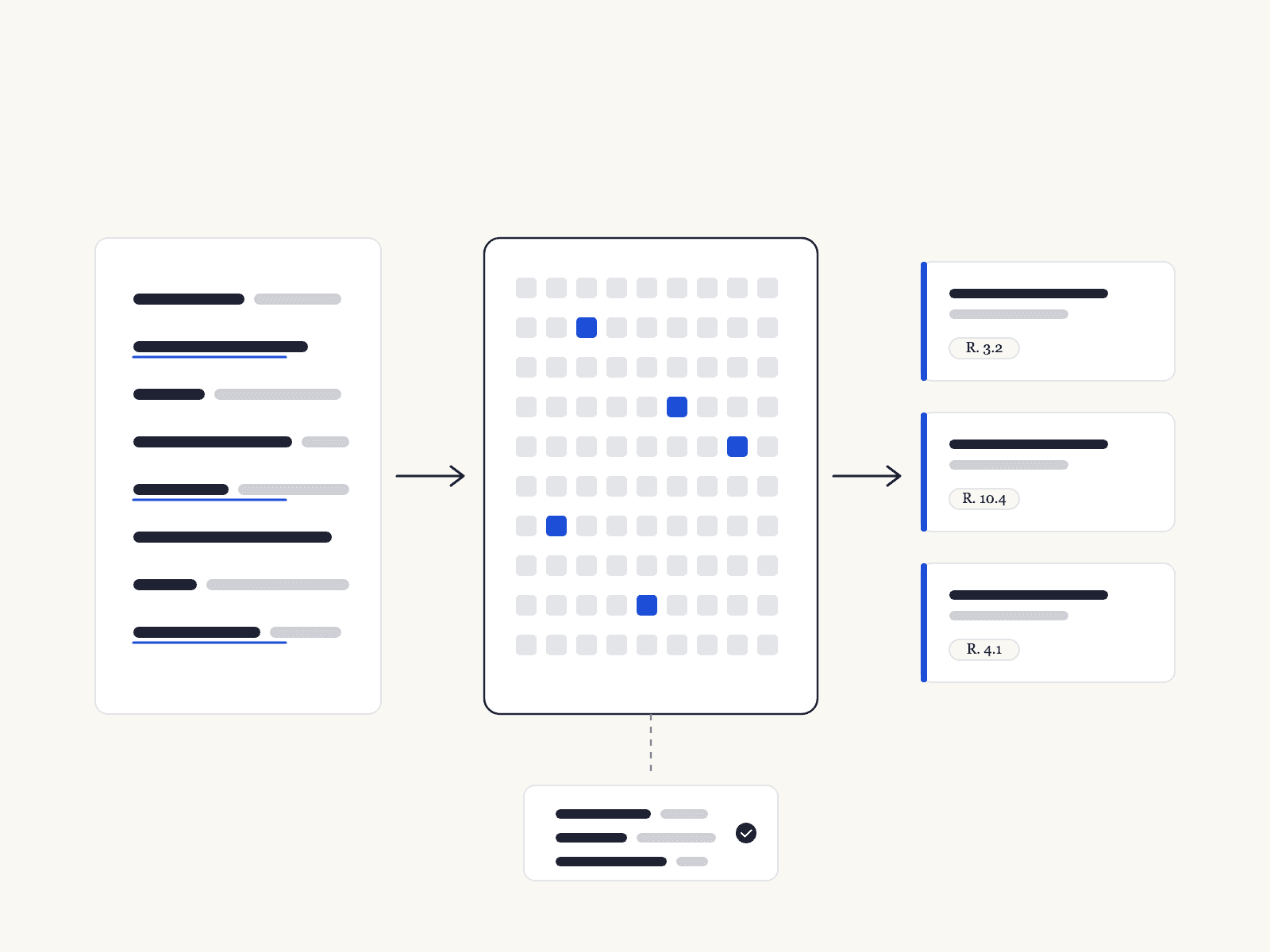
- 1
It reads every citation.
Each one is broken into its parts: the case name, the reporter, the volume and page, the court and the year.
- 2
It checks each part against the Bluebook.
Is the page span right, is the court named, is a short form allowed here. Every rule is written in code, so the same document always gets the same answer.
- 3
It looks every case up.
In the public court record, to confirm that the case exists and was decided by that court in that year.
- 4
It shows you, and you decide.
Each finding shows what you wrote, the corrected form and the rule. Accept it or dismiss it. Nothing changes until you do.
What it will not do.
It does not judge what a case stands for.
It checks the form of a citation and whether the case exists. Whether the case supports your argument is your call, and it stays yours.
It never calls a case fake.
A citation with nothing on record is reported as not confirmed, with the date of the data. The record is incomplete and recent cases are expected to miss, so a miss is a prompt to look, not a verdict.
It does not write citations.
Nothing is generated. It checks what you wrote and offers the corrected form, with the rule named, and you decide.
What it covers.
- 1Structure and signalsCitation sentences, signal order, and how authorities are strung together.
- 2Typeface conventionsWhat is italicised and what is roman, in a brief and in a law review.
- 3Subdivisions and pincitesPages, sections, paragraphs, footnotes, and the ranges that join them.
- 4Short forms and id.When a short citation is allowed, and what “id.” may refer back to.
- 5QuotationsBlock quotations, alterations, omissions, and quotation marks.
- 6Abbreviations and numbersAbbreviation spacing, ordinals, numerals, and symbols.
- 8CapitalisationCourt, party, title, and constitutional capitalisation in briefs.
- 9Titles of officialsJudges, justices, and the titles that take a capital.
- 10CasesCase names, reporters, courts, dates, and the parentheticals that follow.
- 11ConstitutionsFederal and state constitutions, articles, and amendments.
- 12StatutesCodes, session laws, ordinances, and the year of the code edition.
- 13Legislative materialsBills, resolutions, hearings, reports, and debates.
- 14Administrative materialsRegulations, agency adjudications, and the Federal Register.
- 15Books and reportsAuthors, editors, editions, and the works cited in full.
- 16PeriodicalsLaw reviews, magazines, newspapers, and their volume and page forms.
- 17Unpublished sourcesManuscripts, forthcoming works, letters, and interviews.
- 18Internet and mediaURLs, databases, recordings, and broadcast material.
- 19Looseleaf servicesReporters and services cited by volume, publisher, and date.
- 20Foreign materialsNon-US jurisdictions, languages, and the T2 country tables.
- 21International materialsTreaties, international courts, and intergovernmental bodies.
- 22Tribal materialsTribal codes, courts, and constitutions.
- 23Archival materialsCollections, finding aids, and material held in an archive.
- BBluepagesThe conventions that govern documents submitted to a court.
- TTables, and moreReporters, courts, abbreviations, and jurisdictions. Every check, in the rule library.
Who makes it.
Counselcite is independent. It is not affiliated with the Bluebook or its publishers, and the rules it applies are restated in its own words from the published editions. A question or a wrong finding reaches a person, and a reported finding is read.