
Id., supra, or a short form: which one, and when
3 min readChecked against the Bluebook, 22nd ed. (2025)
Id. for the authority cited just before. A short form for a case or statute cited earlier. Supra for a book or article. The forms, and the two mistakes people make with them.
Which one to use
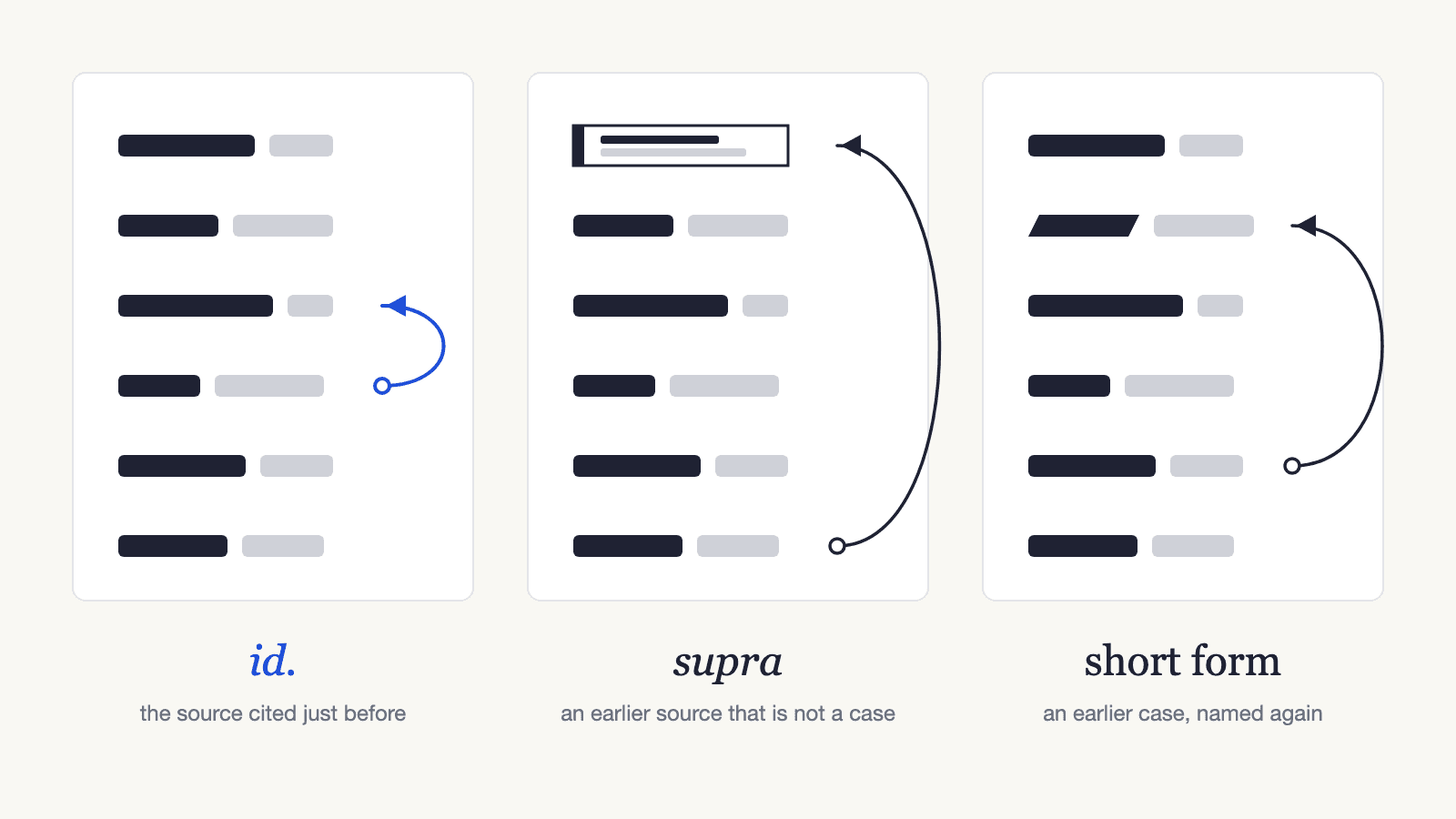
| Form | Use it when | Looks like |
|---|---|---|
| Id. | The citation just before this one cited exactly this authority, and nothing else. | Id. at 678. |
| Short form | A case or statute was cited in full earlier in the same discussion. | Iqbal, 556 U.S. at 678. |
| Supra | A book, article, report or hearing was cited in full earlier. | Garner, supra, at 42. |
Id. works for any kind of authority, as long as it is unambiguous. Supra is not used for a case or a statute; those have short forms of their own.
Id.
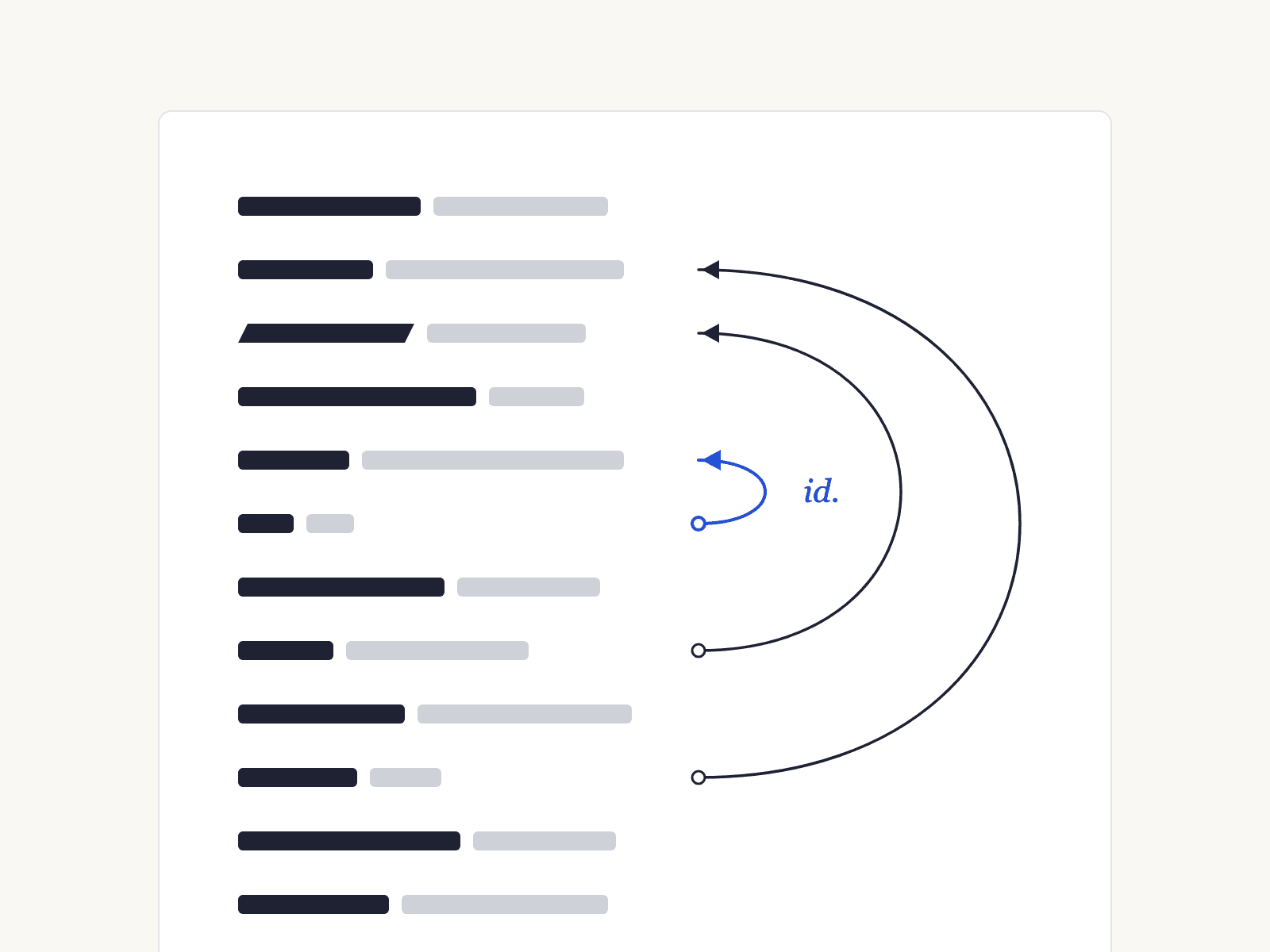
Id. means the one authority cited immediately before. After a string cite it is ambiguous, so it cannot follow a citation to more than one authority.
- Wrong
- Iqbal, 556 U.S. at 678; Twombly, 550 U.S. at 555. Id. at 556.
- Right
- Iqbal, 556 U.S. at 678; Twombly, 550 U.S. at 555. Twombly, 550 U.S. at 556.
The period is part of the word and is italicised with it. A new page follows “at”, with no comma. It is capitalised only when it opens a citation sentence: See id. at 8.
- Wrong
- Id., 680.
- Right
- Id. at 680.
Short forms
| Authority | Short form | Example |
|---|---|---|
| Case | One party's name, volume, reporter, “at”, page | Iqbal, 556 U.S. at 678. |
| Statute | The section again, no year | 29 U.S.C. § 207(a). |
| Regulation | The section again | 29 C.F.R. § 541.100. |
| Constitution | Cited in full each time; only id. may shorten it | U.S. Const. amend. IV. |
| Book or article | Supra with the author's last name | Garner, supra, at 42. |
| Court filing | The abbreviated title again | Pl.'s Mot. at 3. |
A case short form keeps the volume and reporter and introduces the page with “at”. The name is the party that identifies the case, so not United States, a state, or an official sued in every case.
- Wrong
- Iqbal at 678.
- Right
- Iqbal, 556 U.S. at 678.
- Wrong
- United States, 550 U.S. at 555.
- Right
- Twombly, 550 U.S. at 555.
Supra
Supra is for secondary sources. It takes the author's last name, a comma, and the page; a full citation must come first. A case cited earlier is re-cited by its short form, not by supra.
- Wrong
- Iqbal, supra, at 678.
- Right
- Iqbal, 556 U.S. at 678.
Hereinafter is for a source whose name is too long to repeat: register the short name in brackets after the full citation, then use it with supra. Where the author's name alone would do, leave hereinafter out.
Questions people ask
- What is the difference between id. and supra?
- Id. refers to the single authority cited immediately before it, of any kind. Supra refers back to a book, article or other secondary source cited in full earlier. A case or statute cited earlier takes its own short form, not supra.
- Can you use id. after a string cite?
- No. After a citation to more than one authority, id. is ambiguous; use the short form with the case name instead.
- What is the Bluebook short form for a case?
- One party's name in italics, the volume, the reporter and “at” with the page: Iqbal, 556 U.S. at 678. Use the party that identifies the case, not a government or an official who appears in many cases.